

The last mile has long been the most expensive and complex stage of the delivery journey. Rising customer expectations, growing order volumes, and increasing operational costs are pushing logistics providers to rethink traditional delivery models. Today, autonomous vehicle technology is emerging as a game-changing solution, enabling businesses to streamline deliveries, improve efficiency, and build more sustainable logistics networks. From autonomous ground vehicles to delivery drones, intelligent mobility is redefining how goods reach customers.
Deliver Faster with Intelligent Automation
Traditional last-mile delivery often faces challenges such as traffic congestion, labor shortages, and inefficient routing. Autonomous vehicle technology addresses these issues by combining artificial intelligence, advanced sensors, and real-time navigation to optimize every delivery.
Key capabilities include:
- AI-powered route optimization that adapts to changing traffic conditions.
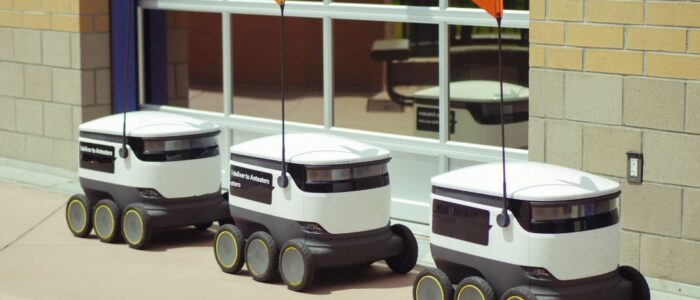
- Driverless delivery vans and sidewalk robots that operate with minimal human intervention.
- Autonomous drones for rapid delivery to hard-to-reach locations.
- Continuous 24/7 operations that improve delivery capacity and reduce delays.
These innovations enable logistics providers to increase delivery speed while improving overall operational efficiency.
Reduce Costs While Supporting Sustainable Logistics
Businesses are under constant pressure to reduce transportation costs without compromising service quality. Autonomous delivery systems help lower operating expenses while supporting environmental sustainability.
Organizations adopting autonomous vehicle technology can:
- Reduce labor-related operating costs through intelligent automation.
- Lower fuel consumption by optimizing delivery routes.
- Deploy electric autonomous vehicles to reduce emissions.
- Improve fleet utilization with continuous vehicle operations.
The result is a logistics model that is both cost-efficient and environmentally responsible.
Improve Visibility and Customer Satisfaction
Successful last-mile delivery depends on real-time visibility and accurate execution. Autonomous vehicle technology enables logistics teams to monitor deliveries continuously while responding quickly to changing conditions.
Businesses can strengthen delivery operations by:
- Using cameras, LiDAR, radar, and AI to navigate safely around obstacles.
- Tracking every vehicle through cloud-connected fleet management platforms.
- Providing customers with accurate delivery updates and estimated arrival times.
- Leveraging predictive analytics to improve fleet planning and resource allocation.
Greater visibility leads to more reliable deliveries, stronger customer trust, and better operational decision-making.
Also Read: Beyond Traffic: How Smart City Mobility Solutions Are Redefining Urban Life
Conclusion
As e-commerce and customer expectations continue to grow, logistics providers need smarter ways to improve last-mile performance. By embracing autonomous vehicle technology, businesses can accelerate deliveries, reduce operational costs, strengthen sustainability initiatives, and enhance customer experiences. Organizations that invest in autonomous delivery solutions today will be better positioned to build agile, resilient, and future-ready logistics networks in an increasingly competitive marketplace.