Mobility
How Autonomous Vehicle Technology Is Moving From Assisted Driving to True Autonomy
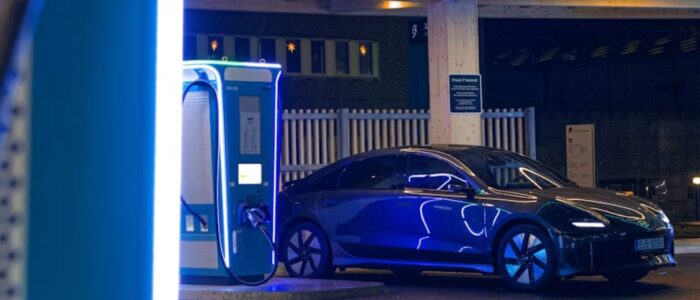
Image Courtesy: Unsplash


The automotive industry is moving through a significant shift from driver assistance toward increasingly autonomous mobility. Advanced sensors, artificial intelligence, high performance computing, and connected infrastructure are enabling vehicles to understand their surroundings and make increasingly complex driving decisions. As these capabilities mature, autonomous vehicle technology is evolving from systems that support drivers toward platforms designed to perform more of the driving task independently.
The transition, however, is not simply about adding more sensors or software. True autonomy requires vehicles to perceive environments, interpret situations, predict what other road users may do, and respond safely in real time.
Also Read: How Smart City Mobility Solutions Reduce Urban Traffic Congestion
From Assistance to Automated Decision Making
Many current vehicles can assist with functions such as lane keeping, adaptive cruise control, parking, and emergency braking. These systems can reduce driver workload, but they generally require continued driver attention and supervision.
More advanced autonomous systems are designed to combine multiple capabilities into a coordinated driving system. Instead of responding to a single condition, the vehicle can process information from cameras, radar, lidar, navigation systems, and other sources to develop a broader understanding of its environment.
This shift places greater emphasis on software capable of making decisions across complex driving scenarios.
AI Is Becoming the Core Intelligence Layer
Artificial intelligence plays a central role in enabling autonomous vehicles to interpret their surroundings. Machine learning models can identify vehicles, pedestrians, road markings, traffic signals, obstacles, and other objects.
AI can also help vehicles predict how surrounding road users may behave. This predictive capability is essential because safe driving requires more than recognizing what is happening now. The vehicle needs to anticipate what could happen next and select an appropriate response.
As AI models become more capable, autonomous vehicle technology can handle increasingly complex environments.
Real Time Computing Is Essential
Autonomous vehicles generate and process enormous volumes of sensor data. Decisions must often be made within fractions of a second, making high performance onboard computing essential.
Modern vehicle computing platforms need to process sensor inputs, run AI models, plan routes, and control vehicle functions with minimal delay. Efficient computing architectures can also reduce reliance on constant cloud connectivity, allowing critical decisions to take place directly inside the vehicle.
Connectivity Expands Vehicle Awareness
Connected vehicle infrastructure can provide additional information beyond what onboard sensors can detect. Vehicles may receive information about traffic conditions, road hazards, infrastructure, or other connected vehicles.
Vehicle to everything communication could therefore complement onboard perception and help autonomous systems build a more complete understanding of their surroundings.
Safety and Validation Remain Critical
The move toward autonomy also creates demanding safety requirements. Autonomous systems must perform reliably across changing weather, road conditions, traffic patterns, and unexpected situations.
Extensive simulation, testing, monitoring, redundancy, and software validation are required before autonomous capabilities can be deployed more broadly. Cybersecurity is equally important because connected vehicles can introduce additional digital attack surfaces.
Also Read: The EV Charging Station Management Challenge Behind High Growth Networks
Conclusion
Autonomous vehicle technology is progressing from systems that assist drivers toward increasingly independent driving capabilities. AI, real time computing, advanced sensing, connectivity, and rigorous safety engineering are working together to make this transition possible.
The path to true autonomy will depend not on a single breakthrough but on the continued integration of these technologies. As vehicles become increasingly software defined and intelligent, autonomous mobility will increasingly depend on how effectively hardware, software, data, and infrastructure work together.