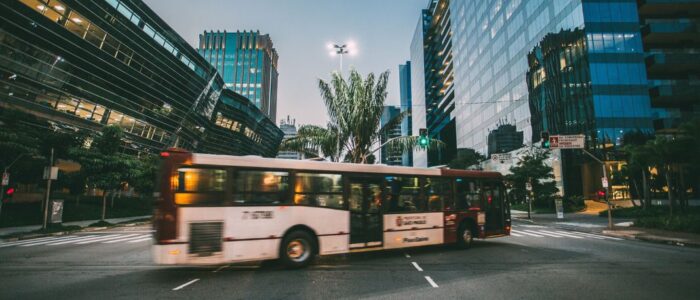


A bus route that works well during one part of the day may become inefficient when traffic builds, passenger demand changes, or an unexpected road closure disrupts the journey. Fixed routes and schedules can struggle to respond to these conditions in real time. Smart city mobility solutions give transit agencies access to data and intelligent tools that can help them understand changing conditions and make better decisions about where and when buses should operate.
Real-Time Data Reveals What’s Happening on the Road
Effective route optimization starts with visibility. GPS, connected vehicles, traffic sensors, and other data sources can provide information about vehicle locations, congestion, passenger demand, and delays.
Instead of relying only on historical schedules, transit operators can use this information to understand what is happening across the network at a given moment. If a particular corridor is experiencing heavy congestion or passenger demand suddenly increases, operators have more information to determine whether adjustments are needed.
AI Can Help Identify Better Routes
Analyzing transportation data manually becomes difficult as the number of vehicles, routes, and variables increases. Artificial intelligence can process large volumes of information and identify patterns that may not be immediately apparent to transit planners.
Smart city mobility solutions can use AI and algorithms to evaluate factors such as traffic conditions, travel times, passenger demand, and historical patterns. This can help agencies identify inefficient routes and determine where changes could improve service.
Dynamic routing can also allow buses to respond to disruptions. When an accident or major congestion affects a road, route-planning systems can identify alternative paths and help operators make faster adjustments.
Transit Signal Priority Helps Buses Move Through Intersections
Traffic signals can create significant delays for buses, particularly along busy corridors. Transit signal priority can help address this problem by allowing eligible buses to communicate with traffic signal systems.
Depending on the system and traffic conditions, a signal may extend a green phase or reduce the amount of time a bus waits at a red light. Over multiple intersections, these small adjustments can help reduce unnecessary stops and improve travel-time consistency.
This makes traffic signal data another valuable input for optimizing bus operations.
Demand-Responsive Transit Matches Service to Riders
Not every route experiences consistent passenger demand. Some areas may have crowded buses during peak periods but relatively low demand at other times.
Demand-responsive transit uses passenger requests and demand patterns to determine where service is needed. Instead of operating every vehicle along a rigid route regardless of demand, transit providers can adjust routes, schedules, or stops based on actual usage.
For lower-demand areas, this approach can help reduce unnecessary trips while maintaining access to transportation.
Predictive Analytics Helps Plan Ahead
Route optimization does not have to wait for a problem to occur. Historical travel patterns, passenger demand, weather conditions, and other data can help predictive models anticipate future transportation conditions.
For example, analytics could identify that a particular route regularly experiences crowding during a certain period. Transit agencies can use that insight to adjust schedules or vehicle capacity before the demand occurs.
Smart city mobility solutions therefore support both immediate decisions and longer-term route planning.
Also Read: Why Cities Need an Intelligent Mobility Platform for Data Driven Transportation
Making Bus Networks More Responsive
Bus route optimization is ultimately about matching transit service more closely with how people and traffic actually move through a city. Real-time data provides visibility, AI helps analyze complex conditions, transit signal priority can reduce intersection delays, and demand-responsive systems can adapt service to passenger needs.
By bringing these capabilities together, smart city mobility solutions can help transit agencies move beyond static routes and make bus networks more responsive to changing conditions. The result can be more efficient operations, better use of transit resources, and a service that adapts more effectively to the realities of daily travel.